CEFR C1 · advanced

C1 vocabulary list: 40 useful words with examples

C1 words are what make English sound educated and precise. You find them in literature, serious journalism, and debates. They are rarely needed to survive, but they are what separates fluent from advanced.

Updated

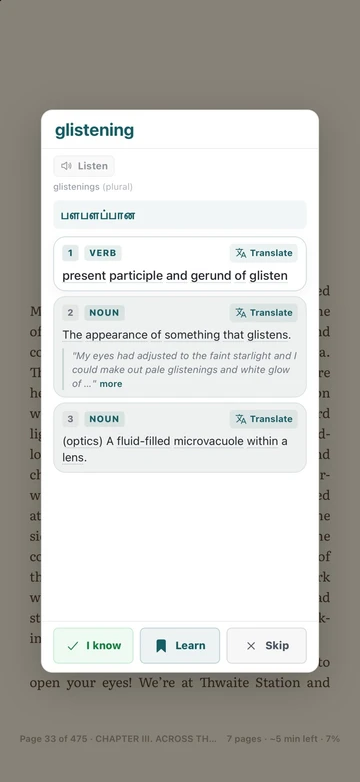
TeakReader showing the meaning of a word tapped in a book, with buttons to save it.

Short answer

C1 vocabulary is advanced English: words like exacerbate, impeccable, perfunctory, and fiasco. In TeakReader’s word list they are roughly the 30,000th to 40,000th most common words. You need a good share of them to read classics like Pride and Prejudice or Jane Eyre comfortably.

40 C1 words to learn

Grouped by topic. The number after each word is its rank in our frequency list: lower means more common. Check any other word →

Character and behaviour

smugadjective#30,639

too pleased with yourself

He gave a smug smile after winning.

nimbleadjective#30,405

quick and light in movement or thought

The pianist’s nimble fingers flew over the keys.

pedanticadjective#30,724

too worried about small rules and details

Correcting every comma is a bit pedantic.

forthrightadjective#30,484

direct and honest in what you say

She was forthright about her concerns.

talkativeadjective#30,744

liking to talk a lot

My taxi driver was very talkative.

temperamentaladjective#30,737

with moods that change quickly; or unreliable

The old printer is temperamental.

heedlessadjective#30,918

not paying attention to danger or advice

Heedless of the warning, they swam out.

primadjective#30,763

very formal and easily shocked

She gave a prim little cough.

faithlessadjective#30,190

not loyal

The novel’s hero is betrayed by a faithless friend.

connoisseurnoun#30,823

an expert on things like art, food, or wine

He is a connoisseur of good coffee.

Actions

exacerbateverb#30,502

make a bad situation worse

Shouting only exacerbated the argument.

ameliorateverb#30,611

make a bad situation better (formal)

New laws aim to ameliorate working conditions.

reiterateverb#30,139

say something again, for emphasis

Let me reiterate: the deadline is Friday.

stipulateverb#30,036

state clearly as a rule or condition

The contract stipulates two weeks’ notice.

permeateverb#30,061

spread through every part of something

The smell of bread permeated the house.

infringeverb#30,340

break a rule or limit someone’s rights

Copying the logo infringes their trademark.

retraceverb#30,125

go back the same way

I retraced my steps to find my keys.

startleverb#30,661

surprise and slightly frighten

The phone startled me awake.

hurlverb#30,477

throw with great force

Protesters hurled stones at the police.

propelverb#30,878

push forward; or drive to success

One hit song propelled her to fame.

Describing things

impeccableadjective#30,363

perfect, with no mistakes

His English is impeccable.

ostentatiousadjective#30,301

made to impress people with money or style

They live in an ostentatious mansion.

nebulousadjective#30,409

unclear and not well defined

The plan is still nebulous.

perfunctoryadjective#30,664

done quickly, without care or interest

She gave a perfunctory nod and left.

reprehensibleadjective#30,087

very bad and deserving criticism

Lying to patients is reprehensible.

inconsequentialadjective#30,400

not important

They argued about inconsequential details.

counterproductiveadjective#30,248

having the opposite effect to the one you want

Punishing mistakes can be counterproductive.

lividadjective#30,757

extremely angry

Dad was livid when he saw the car.

aghastadjective#30,442

shocked and horrified

We stared, aghast, at the damage.

stridentadjective#30,848

loud and unpleasant; or forceful in opinion

Critics were strident in their attacks.

Situations and manner

fiasconoun#30,642

a complete, often embarrassing, failure

The launch party was a total fiasco.

debaclenoun#30,522

a sudden, complete failure

The election was a debacle for the party.

upshotnoun#30,561

the final result

The upshot was that we had to start again.

onusnoun#30,874

responsibility for doing something

The onus is on the seller to prove it.

mishapnoun#30,871

a small accident or bad luck

The trip went without a single mishap.

disarraynoun#30,402

a state of confusion and untidiness

After the move, the house was in disarray.

gustonoun#30,654

great enjoyment and energy

He sang with gusto.

grudginglyadverb#30,262

in an unwilling way

She grudgingly admitted he was right.

wistfullyadverb#30,659

with sad longing for something

He looked wistfully at old photos.

sporadicallyadverb#30,145

now and then, not regularly

It rained sporadically all week.

In real English

Where you meet C1 words

Classics such as Pride and Prejudice, Jane Eyre, and The Picture of Dorian Gray; long-form journalism; legal and academic English; and witty dramas.

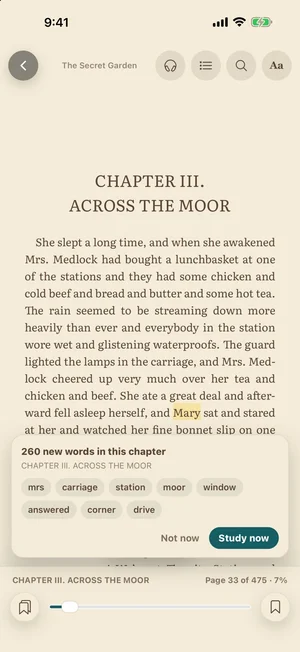
Lists help, but words stick when you meet them again in a story. TeakReader shows the new words before each chapter, and lets you tap any word for its meaning and level while you read.

Not sure a book is right for you? See classic books by reading level or TV shows by English level.

TeakReader card listing the new words in a chapter before you read it.

Study tips

How to learn C1 vocabulary

  1. Learn C1 words in pairs with a simpler word: exacerbate ≈ make worse, ameliorate ≈ make better.
  2. Pay attention to register: many C1 words sound formal, so use them in writing before speech.
  3. Read one long article or chapter a day. C1 words are rare, so you need lots of reading to meet them often.

FAQ

Frequently asked questions

How many words do you need for C1?

There is no single official number. One widely cited study (Milton, 2010) links C1 with knowing roughly 3,750–4,500 of the most common base words. Our list ranks every word form separately (help, helps, helped, helpful) and includes names and variants, so its rank ranges are much larger than these counts.

Is this an official CEFR word list?

No. The official reference is the Cambridge English Vocabulary Profile. Our levels come from how common each word is in large English frequency lists, which matches the CEFR closely for most words but not all. We use the same method for our book levels and the free word checker.

What is the best way to learn C1 words?

Meet them in context. Read books or watch shows slightly above your level, look up the words you keep seeing, and review them a few times over the next weeks. A list is a good start, but words stick when you see them again in real stories.

How can I check the level of another word?

Use the free English word level checker. Type any word to see its estimated CEFR level and how common it is, or paste a paragraph to see which words are hard.

Ready to read

Learn C1 words from the books you read.

TeakReader shows the level of every word you tap and turns the hard ones into flashcards. Free on iPhone, iPad, and Android.

Download on the App StoreGet it on Google Play