CEFR B2 · upper-intermediate

B2 vocabulary list: 40 useful words with examples

B2 is where English starts to feel like literature. These words appear in novels, opinion articles, and dramas, and they let you describe people and situations precisely instead of with “good”, “bad”, and “very”.

Updated

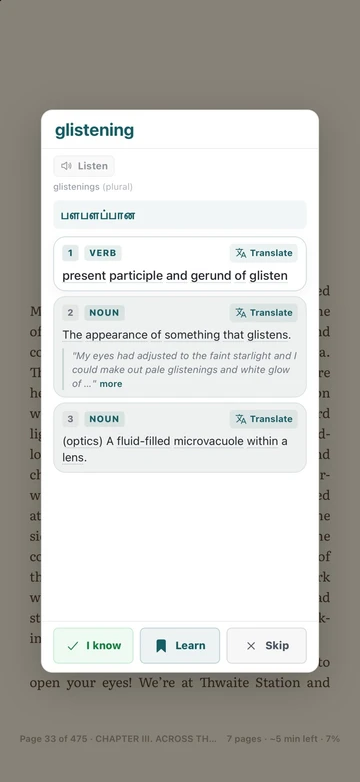
TeakReader showing the meaning of a word tapped in a book, with buttons to save it.

Short answer

B2 vocabulary is upper-intermediate English: words like meticulous, hesitant, uncanny, and underestimate. In TeakReader’s word list they are roughly the 20,000th to 30,000th most common words. Knowing them is what lets you read most modern novels and classics with only occasional lookups.

40 B2 words to learn

Grouped by topic. The number after each word is its rank in our frequency list: lower means more common. Check any other word →

Character and behaviour

astuteadjective#20,015

clever at understanding situations and people

An astute buyer checks the price twice.

insolentadjective#20,217

rude and disrespectful

The boy gave an insolent reply to his teacher.

considerateadjective#20,681

thinking about other people’s feelings

It was considerate of you to call.

hesitantadjective#20,300

slow to act or speak because you are unsure

She was hesitant to ask for help.

meticulousadjective#20,269

very careful about every small detail

He keeps meticulous notes of every meeting.

submissiveadjective#20,089

always obeying others

The dog lay down in a submissive way.

proficientadjective#20,803

skilled and experienced

She is proficient in three languages.

sarcasmnoun#20,463

saying the opposite of what you mean, to mock someone

“Great job,” he said with obvious sarcasm.

tenacitynoun#20,019

the quality of not giving up

Her tenacity won her the job in the end.

franknessnoun#20,791

saying what you think honestly

I appreciated his frankness about the problem.

Actions

navigateverb#20,011

find your way; or deal with something difficult

It took weeks to navigate the new system.

avengeverb#20,013

punish someone for harm they did to you or others

He swore to avenge his brother.

shunverb#20,291

avoid someone or something on purpose

After the scandal, his friends shunned him.

forsakeverb#20,309

leave someone or something forever (formal)

She would never forsake her family.

obstructverb#20,361

block a way or stop progress

A fallen tree obstructed the road.

underestimateverb#20,357

think something is smaller or easier than it is

Never underestimate a quiet opponent.

soakverb#20,457

make or become completely wet

Soak the beans in water overnight.

browseverb#20,520

look through things without a clear plan

I like to browse in old bookshops.

meditateverb#20,607

think deeply in silence, often to relax

He meditates for ten minutes every morning.

enquireverb#20,769

ask for information (UK, formal)

I am writing to enquire about the job.

Describing things

placidadjective#20,078

calm and not easily upset

The lake was placid in the early morning.

mistyadjective#20,071

full of light fog

We walked through the misty hills.

greasyadjective#20,537

covered in oil or fat

The chips were too greasy to finish.

immaculateadjective#20,635

perfectly clean or tidy

Her kitchen is always immaculate.

uncannyadjective#20,588

strange in a way that is hard to explain

I had an uncanny feeling I had been there before.

ghostlyadjective#20,651

pale and strange, like a ghost

A ghostly light shone in the window.

trickyadjective#20,402

difficult and needing care

Parking here is a bit tricky.

sombreadjective#20,480

serious and sad; or dark in colour

The mood at the funeral was sombre.

foreseeableadjective#20,267

that you can predict

Prices will stay high for the foreseeable future.

homemadeadjective#20,539

made at home, not bought

Nothing beats homemade bread.

Story and everyday words

newcomernoun#20,349

a person who has just arrived

The newcomers were welcomed with a party.

daybreaknoun#20,194

the time when the sun comes up

They left the camp at daybreak.

paperworknoun#20,403

forms and documents you must complete

Buying a house involves a lot of paperwork.

avalanchenoun#20,656

a large fall of snow down a mountain; or a huge amount

We got an avalanche of emails after the sale.

blueprintnoun#20,204

a detailed plan

The report is a blueprint for the new city.

antidotenoun#20,202

a medicine against a poison; or a cure for a bad feeling

Laughter is the best antidote to stress.

uproarnoun#20,528

loud, angry public protest or noise

The decision caused an uproar.

venomnoun#20,318

poison from a snake or insect; or great anger in words

She spoke with real venom.

retortnoun / verb#20,102

a quick, sharp reply

“That’s your problem,” she retorted.

dizzinessnoun#20,079

the feeling that things are spinning

The medicine can cause dizziness.

In real English

Where you meet B2 words

Classics such as The Secret Garden, Sherlock Holmes, and Treasure Island; modern novels; quality newspapers; and dramas like Sherlock or Breaking Bad.

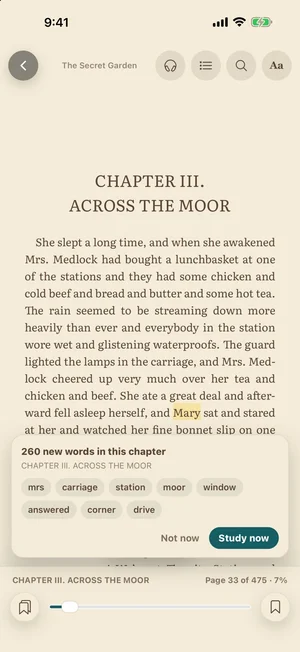
Lists help, but words stick when you meet them again in a story. TeakReader shows the new words before each chapter, and lets you tap any word for its meaning and level while you read.

Not sure a book is right for you? See classic books by reading level or TV shows by English level.

TeakReader card listing the new words in a chapter before you read it.

Study tips

How to learn B2 vocabulary

  1. Notice the feeling of a word, not just its meaning: “placid” and “calm” are close, but not the same.
  2. Collect words that describe people. They come back in every novel.
  3. When you meet a B2 word in a book, read the sentence again after you look it up.

FAQ

Frequently asked questions

How many words do you need for B2?

There is no single official number. One widely cited study (Milton, 2010) links B2 with knowing roughly 3,250–3,750 of the most common base words. Our list ranks every word form separately (help, helps, helped, helpful) and includes names and variants, so its rank ranges are much larger than these counts.

Is this an official CEFR word list?

No. The official reference is the Cambridge English Vocabulary Profile. Our levels come from how common each word is in large English frequency lists, which matches the CEFR closely for most words but not all. We use the same method for our book levels and the free word checker.

What is the best way to learn B2 words?

Meet them in context. Read books or watch shows slightly above your level, look up the words you keep seeing, and review them a few times over the next weeks. A list is a good start, but words stick when you see them again in real stories.

How can I check the level of another word?

Use the free English word level checker. Type any word to see its estimated CEFR level and how common it is, or paste a paragraph to see which words are hard.

Ready to read

Learn B2 words from the books you read.

TeakReader shows the level of every word you tap and turns the hard ones into flashcards. Free on iPhone, iPad, and Android.

Download on the App StoreGet it on Google Play