B1–B2 originals, ranked by data

Classic books for intermediate English learners

You can read simple English, and now you want a real novel. These complete original classics suit readers moving from B1 to B2, ranked from easiest. Each links to a full analysis with the words to learn first.

Download on the App StoreGet it on Google Play

Updated

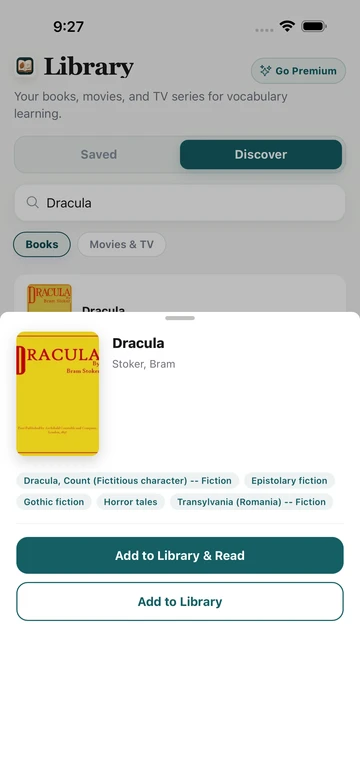
Dracula by Bram Stoker in TeakReader Discover, ready to add to the library and read.

Short answer

B1: Sherlock Holmes. B2: Dracula.

At B1, start with one Sherlock Holmes story or The Time Machine. At B2, Dracula, Little Women and Treasure Island are manageable. At upper B2, try The Secret Garden, Anne of Green Gables, A Christmas Carol, or The Great Gatsby.

Short does not mean easy. The Call of the Wild and Dr Jekyll and Mr Hyde are short, but their vocabulary and sentences are harder than Dracula’s.

Ranked from easiest

12 classics for B1–B2 readers

We ranked these books by vocabulary coverage, sentence style, dialect, and how easy the story is to follow. The level is for the complete original text.

  1. The Adventures of Sherlock Holmes

    Arthur Conan Doyle, 1892 · 101,488 words

    Strong B1 to B2Approachable in short episodes

    The twelve-story structure and clear mysteries make this one of the most approachable originals here, although Victorian legal, household, and social vocabulary still requires support.

    96.63% of running words fall within the A1–B1 bands.

    Full The Adventures of Sherlock Holmes analysis
  2. The Time Machine

    H. G. Wells, 1895 · 30,696 words

    B2 (strong B1 with support)Short but descriptive

    A short novella with an exciting idea. The plot is easy to follow, but long descriptive passages and Victorian scientific language need B2-level reading stamina.

    95.79% of running words fall within the A1–B1 bands.

    Full The Time Machine analysis
  3. Dracula

    Bram Stoker, 1897 · 154,425 words

    B2Readable diaries, tricky dialects

    Told through diaries and letters, Dracula is long but surprisingly readable. The main challenges are its length and several characters who speak in strong dialect or broken English.

    96.34% of running words fall within the A1–B1 bands.

    Full Dracula analysis
  4. Little Women

    Louisa May Alcott, 1868 · 178,952 words

    B2Clear but very long

    Everyday family life told in clear, warm English. Coverage is high, but the complete book (both parts) is very long, and some words about clothes, manners and home life are old-fashioned.

    95.71% of running words fall within the A1–B1 bands.

    Full Little Women analysis
  5. Treasure Island

    Robert Louis Stevenson, 1883 · 65,692 words

    Upper B2Nautical words and pirate speech

    A fast adventure story, but full of sailing words and pirate speech. Most learners understand the plot easily and struggle with the ship vocabulary.

    95.66% of running words fall within the A1–B1 bands.

    Full Treasure Island analysis
  6. The Secret Garden

    Frances Hodgson Burnett, 1911 · 78,810 words

    Upper B2Challenging dialect

    The narrative is approachable, but Yorkshire dialect, garden vocabulary, and historical language make the original substantially harder than children’s adaptations.

    95.58% of running words fall within the A1–B1 bands.

    Full The Secret Garden analysis
  7. The Adventures of Tom Sawyer

    Mark Twain, 1876 · 69,675 words

    Upper B2Easy story, heavy dialect

    A fun, fast story, but much of the dialogue is written in nineteenth-century Missouri dialect, with spellings such as “ain’t”, “knowed” and “feller”. The narration itself is easier than the speech.

    94.39% of running words fall within the A1–B1 bands.

    Full Tom Sawyer analysis
  8. Anne of Green Gables

    L. M. Montgomery, 1908 · 98,696 words

    Upper B2Long speeches, rich description

    A gentle story with simple events, but Anne loves “big words” and long, dramatic speeches. Nature descriptions and old words for clothes and farm life add more difficulty.

    94.04% of running words fall within the A1–B1 bands.

    Full Anne of Green Gables analysis
  9. A Christmas Carol

    Charles Dickens, 1843 · 27,822 words

    Upper B2Short but linguistically dense

    Its short length helps, but Dickens’s descriptive sentences, Victorian Christmas customs, and playful narration make the original an upper-intermediate challenge.

    94.27% of running words fall within the A1–B1 bands.

    Full A Christmas Carol analysis
  10. The Call of the Wild

    Jack London, 1903 · 31,509 words

    Upper B2Short, but full of specialist words

    Short and dramatic, but its vocabulary coverage is the lowest of the new books here. Dog-sledding terms, animal sounds, and miners’ slang appear on almost every page.

    93.4% of running words fall within the A1–B1 bands.

    Full The Call of the Wild analysis
  11. The Great Gatsby

    F. Scott Fitzgerald, 1925 · 46,035 words

    Upper B2 to C1Readable plot, difficult subtext

    The novel is short and its plot is accessible, but figurative prose, social implication, and 1920s American context make full literary comprehension an advanced task.

    94.89% of running words fall within the A1–B1 bands.

    Full The Great Gatsby analysis
  12. Strange Case of Dr Jekyll and Mr Hyde

    Robert Louis Stevenson, 1886 · 24,500 words

    Upper B2 to C1Short but formally dense

    Very short, but written in dense, formal Victorian prose. The final chapter, Jekyll’s own statement, is the hardest part of the book.

    95.44% of running words fall within the A1–B1 bands.

    Full Dr Jekyll and Mr Hyde analysis

Choosing well

How to tell if a book is right for you

  1. Read the first two pages. If you understand the main action without a dictionary, the book is probably right.
  2. Count the words you would look up on one page. More than 5–8 usually means the book will feel slow.
  3. Pick a story you care about. Interest keeps you reading through the hard parts.
  4. Check the level in TeakReader. It shows which words in the book you do not know yet, chapter by chapter.

FAQ

Frequently asked questions

What classic book should a B1 English learner read?

At B1, start with a single Sherlock Holmes story or The Time Machine. Both are short enough to finish, and their plots are easy to follow. Read with dictionary support and expect some Victorian vocabulary.

What classic books are good for B2 learners?

Dracula, Little Women and Treasure Island are rewarding B2 choices: engaging stories with manageable vocabulary. At upper B2, try The Secret Garden, Tom Sawyer, Anne of Green Gables, A Christmas Carol, The Call of the Wild, The Great Gatsby, or Dr Jekyll and Mr Hyde.

Is a short book always easier?

No. The Call of the Wild and Dr Jekyll and Mr Hyde are short, but they are harder than the much longer Dracula. Specialist vocabulary and formal sentences matter more than page count.

Should intermediate learners read originals or graded readers?

Both are useful. Graded readers are better for fast, relaxed reading. Originals are better when you want real language and are happy to study some words. Many learners read the graded version first, then the original.

Are these CEFR levels official?

No. They are TeakReader’s estimates based on vocabulary frequency data from the complete original text, plus a review of sentence style, dialect, and background knowledge.

Ready to read

Read a real classic at your level.

Find these books free in TeakReader, see the hard words before each chapter, tap for meanings, and review what you learn.

Download on the App StoreGet it on Google Play