blizzard
15×a heavy snowstorm with strong wind
Comedy · American English
A man lives the same day again and again, so you hear many scenes more than once, which is perfect for learners. The hard part is Phil’s dry, sarcastic humour.


Updated
Short answer
Groundhog Day is best for B1 to B2 learners. Across the whole film, a B1 learner knows about 96.1% of the words, and the characters speak at about 141 words per minute (average).
Difficulty rank: 9 of 16 in our movies by English level list (repetition helps, sarcasm doesn’t).
Beyond the numbers
Groundhog Day is mostly American English. Accent and speed matter as much as vocabulary: if you know the words but can’t catch them, turn on English subtitles and slow down.
Learn these first
B2–C2 words that came up more than once in the film. Counts are for the whole movie.
a heavy snowstorm with strong wind
people staying at a camp; the radio wake-up show calls its listeners “campers”
short trips to do small jobs, like shopping
a sweet baked food
someone who can see the future
a cheap, simple American restaurant
thinking only about yourself
strong Italian coffee
okay ×15yeah ×4hey ×4gonna ×1ain ×1
gonna = going to · wanna = want to · gotta = got to / have to. Textbooks rarely teach them, but films use them all the time.
Vocabulary profile
Share of all spoken words in each frequency band (A1 = the 5,000 most common words).
Watching plan
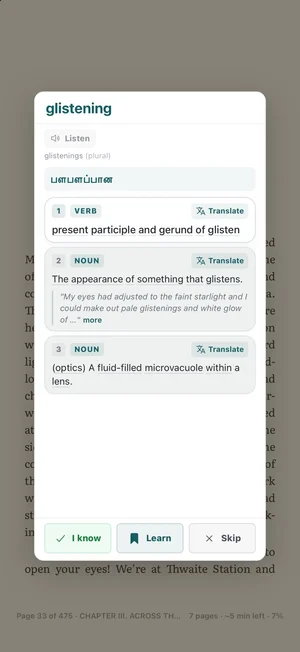
In TeakReader you can import the subtitles of any movie, see the words you don’t know yet, and study them as flashcards before you press play. How it works
We took the full English subtitle file for Groundhog Day (1993, 101 minutes), removed sound descriptions, speaker labels, and character names, and matched each of the 7,191 spoken words to the same frequency list we use for classic book levels. Speaking speed is spoken words divided by the time the subtitles are on screen. Only statistics and single words are shown here.
The recommended level is our estimate from vocabulary, speed, and style, not an official CEFR rating. Subtitle files differ slightly between releases, so treat the numbers as close estimates.
FAQ
Groundhog Day uses everyday words (about 96% known at B1) and repeats its scenes, which makes it great practice. The sarcasm takes a B1–B2 learner to fully enjoy. We recommend it from B1 to B2.
About 141 words per minute of dialogue, which is average for a film. Everyday conversation is often around 150 words per minute.
A learner who knows the most common 20,000 English word forms (our B1 band) knows about 96.1% of the words spoken. Research on listening suggests that knowing about 95% of the words is enough to follow most of what is said, so subtitles help until you reach that point.
We analysed the film’s full English subtitle file (7,191 spoken words), removed sound notes, speaker labels, and character names, and matched every word to the same frequency list we use for book levels and TV shows. The level is our estimate, not an official CEFR rating.
Yes. In TeakReader, search for the movie and import its subtitles. You get a list of the words you don’t know yet, with meanings and flashcards.
Ready to read
Import any movie’s subtitles in TeakReader and get its unknown words with meanings and flashcards. Free on iPhone, iPad, and Android.